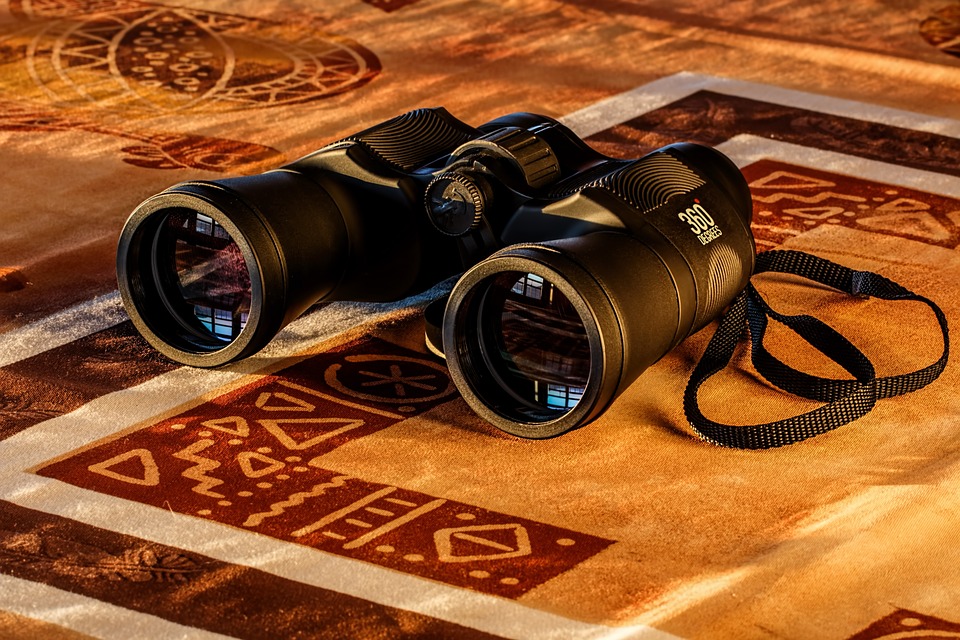
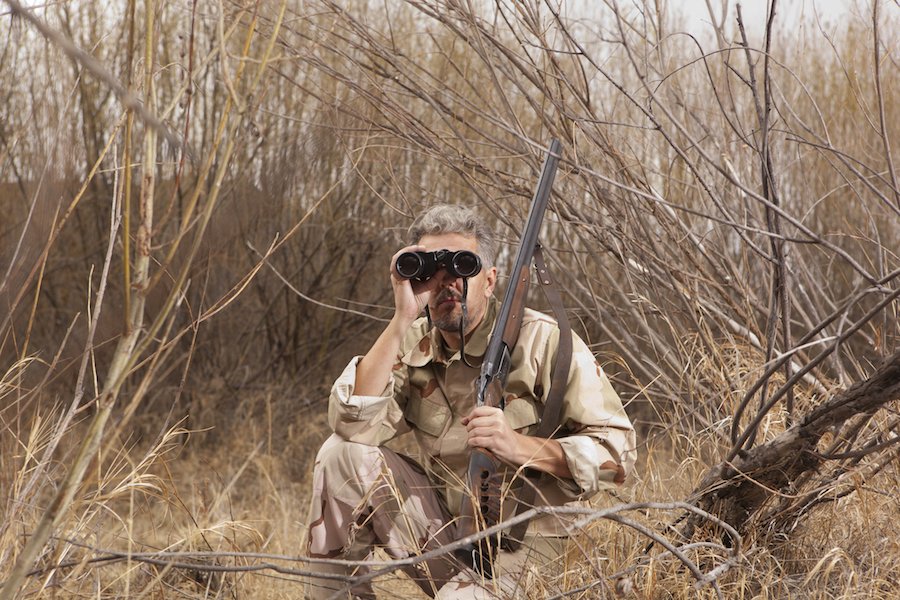
Whether you’re sitting in your blind, on your boat, or walking your favorite waterway, having a great set of binoculars can help you get the most of your trip. There’s so many different types of binoculars, at different price ranges, to choose from. It can be frustrating. I’m going to help make that choice a little easier by giving you the basics about zoom binoculars. I’ll talk about what they are, a few important terms, the advantage and disadvantages, and how to choose a set that fits you best.
What are zoom binoculars?
Simply stated, binoculars are “two telescopes side by side, one for each eye.”
Binoculars with the ability to have a range of magnification are known as “zoom” binoculars. These continuously variable binoculars can change in both directions, from high power to low power, or from low to high. To do that, they have the difficult task of making those two telescopes crisply match up their images. And because movable ocular lenses are used to adjust the power level, more parts can create problems.
Zoom binoculars are identified by their numbers. The first two numbers, separated by a dash, give you the range of magnification. As an example, a 10-30 x 42 means that the range of magnification starts at ten times, and runs up as high as thirty times. Caution! Don’t confuse zoom with binoculars that use a “/” in place of the “-“. The slash indicates that the eyepieces change, often by rotating a turret. These specialty glasses carry a very hefty price tag!
How do Zoom Binoculars Work?
The quick answer is “not as good as fixed” unless you’re willing to pay a whole lot more. Why is that, though?
Simply put, each eyepiece lens has several lens elements in the housing to zoom. And, with each additional part comes additional room for error. On top of that, Zoom binoculars are trying to synchronize the actions of the two separate telescopes by using a flexible linkage band that goes through the ocular arms to connect the two zoom mechanisms. There is a certain amount of unavoidable “slop” or “slack”, resulting in a distorted or fuzzy image because the two telescopes won’t ever have the same magnification.
Advantage
Many people choose zoom binoculars because they prefer the convenience of being able to quickly change the magnification. For example, they may be using them under bright light, following an object that is far away and moving. The variable magnification allows you to scan under the low power, for a greater field of view, and then to zoom in for more detail. Others may choose zoom binoculars with the use of a tripod for astronomy. They can scan the skies at a low magnification until they find an object that requires greater detail.
Disadvantages
The disadvantage of zoom binoculars is the high cost for image quality. And it gets even more complicated, so let’s take a look at a few concerns.
Objective Size
The objective lenses are the apertures. The bigger they are, the greater the amount of light there is available for the image. As a rule, the objective should be 5x magnification. This means that you are either going to have more size, and additional weight, for the upper levels of magnification, or you’re going to sacrifice light.
Let’s look at binoculars with a power of 7X and an objective lens of 35mm. Those lenses have a diameter of 1.38 inches. To improve the light you need at 14X, 70mm lenses are recommended. Those lenses measure 2.75 inches across. That’s double the weight. That’s something to consider if your binoculars are hanging off of your neck all day!
Reduced Field of View
How much of an area you see through your binoculars is known as your field of view. As magnification goes up, your field of view goes down. For example, at 5x, you may see both sides of a tennis court 200 yards away. But zoom to 10X and you may not see anything more than one player.
The table, below, compares FOV’s between zoom and fixed-power binoculars:
Zoom Fixed
10-30×60 zoom, FOV at 10x- 3.4° vs 10×60 fixed-power, FOV- 5.7°
25-125×80 zoom, FOV at 25x- 1.25° vs 25×100 fixed-power, FOV- 2.5°
As you see, zoom lenses FOV is considerably smaller compared to that of fixed magnification binoculars. The difference is much more significant as the power increases. In the example above, the FOV at 25X for the zoom binoculars is only half of the FOV for the fixed magnification binoculars.
Collimation Issues
Because each eyepiece within zoom binoculars uses a moving lens, the image of each will move a little as the lens elements move. This image shift is usually in the opposite direction of changes made in the zoom lever. Getting the images of the two telescopes to line up is referred to as collimation. Poor collimation could result in double-vision and a loss of image area. Proper alignment is even more important as magnification increases.
Exit Pupil
Ideally, you want the exit pupil to be larger than the diameter of your pupils. Binoculars with an Exit Pupil that is smaller than your pupils will make it seem like you’re looking through a peephole.
To find the Exit Pupil size of your binoculars, divide the objective by the magnification. At 8X40, the Exit Pupil is 5mm. That’s pretty big. Now, if we change over to binoculars that are 10X25, our Exit Pupil drops to just 2.5mm. If you intend to use your binoculars during bright days only you have nothing to worry about. But, if you’re a hunter, boater, or star-gazing, then you need to take a close look at the Exit Pupil.
Summary of Advantages/Disadvantages
Zoom binoculars offer the ability to quickly and easily change the magnification. As magnification goes up though, the available light is reduced, your already reduced Field of View drops even lower, collimation issues increase, and the issue of reduced image quality due to Exit Pupil size becomes a greater concern.
Addressing these issues at the factory is expensive. In general, zoom binoculars will cost twice as much as fixed-power binoculars. Additionally, to get to the high magnification levels, objective lenses have to be bigger, adding to the weight, and greater weight means a lowered ability to hold your binoculars steady.
Selecting and using zoom binoculars
You have learned that zoom binoculars offer the convenience of quickly changing magnification, but that convenience comes at a price. For many people, that convenience is well worth either paying more or accepting some of the limitations. So, before you buy your next set of binoculars, answer the questions that follow.
What activity(ies) will they be used for?
What are the conditions? Consider –
Light levels – what time of day will I use them the most? Will I be in an open area with sunlight?
Climate/Moisture – will I need waterproof or rubber coating to absorb the shock of being dropped?
Will I be moving or stationary?
Weight – how long can I hold them without shaking? Will I wear them around my neck? Can I take the time to set them up on a tripod?
Field of View – how important is it to be able to see a wider area?
Level of Magnification – How far away will I be looking? How much detail do I need?
Eye Relief – will I wear glasses of any kind?
How much does cost matter to me? What amount am I willing to pay?
How good is the warranty?
Try Before You Buy
Take a little time at a local sporting goods store to appreciate the differences you’ll find with all binoculars, not just between fixed and zoom binoculars. The variations of objective sizes, magnifications, FOV, and weight have to be experienced. This step is crucial whether you order online or in a store. Consider the following questions before you buy.
How do they feel?
Do they feel balanced when you hold them up to your eyes?
Can you comfortably hold them up without shaking?
Are the controls easy to move as you hold the binoculars to your eyes?
How is the image quality?
Brightness may be hard to judge. Keep in mind the size of the Objective lenses and when you’ll use them.
Clarity – is the picture crisp, even on the edges? What happens to the clarity as you increase the magnification?
Collimation – Are you seeing one sharp, distinct image at high and low power?
Focusing Your Binoculars
Now that you have decided that zoom binoculars are the best choice for you, let’s see how to set them up.
Many of the binoculars have a focus wheel between the two scopes. A right-eye diopter to account for the small difference in the strength of each eye adjustment is found near the eyepiece. Pick out a target that’s about 45 feet away. With your right eye closed, focus the image by moving the center wheel. Next, close your left eye and open your right eye. This time only use the diopter to make the image clear. Now you can open both eyes and use the center focus wheel to make adjustments. Leave the diopter setting alone.
Manufacturers may have different ways to focus their zoom binoculars so be sure to read through your manual carefully.
I heard they were out there but never dreamed of coming face to face with one.
It is Saturday morning, 4:12 am; the alarm is beating out “Should I Stay or Should I Go?” by The Clash. Hmm, good question. My bed is warm and comfortable. The wind is howling and the rain beating the window.
Do I really want to get up to sit out in that weather for the next few hours? Of course I do! I am a duck hunter. When others are sleeping we are out in the field getting soaked with big dreams of limiting out, even when we know we may not see a single bird. I know, it’s kinda crazy.
The rain let up but the biting wind was gusting up to 35mph. Light was an hour away as I crawled up the bank. I made my way into position on the near side of the pond, wrapped the burlap camouflage around me and waited. The rain and wind chilled me to the bone. I was losing the feeling in my hands.
The occasional honking of geese and the sonic whooshing of ducks landing kept me hopeful. It was bound to be a glorious day. But what I imagined would happen, and what was to be reality were not the same.
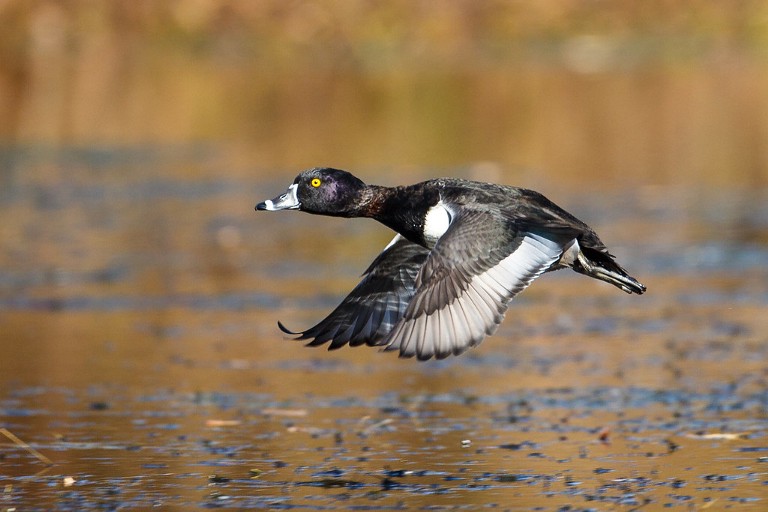
Image by Ray Lotier on flickr
Officially, hunting hours were upon me. Due to the lighting I wasn’t positive the five ducks I had in my sights were legal. I was confident that one of the silhouettes was that of a Pintail and the other a Ring-neck. They’re legal. I wasn’t sure what the others were and I won’t shoot first and identify later. I chose to only take two.
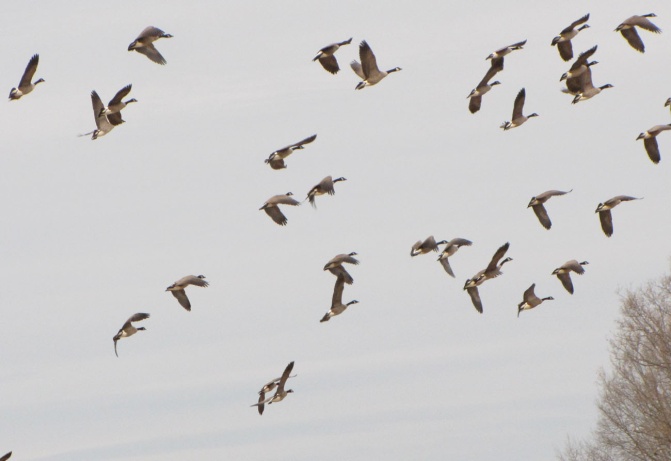
The commotion caused the geese to take flight in a pattern far out of reach. I would have been safe taking a few of the ducks. But I feel good about my decision to identify my game first. I would have other opportunities.
Unfortunately, the opportunity wasn’t going to be on this day. Four hours after that first shot, I decided it would be a good day to look for Mountain Quail. I packed up and headed north.
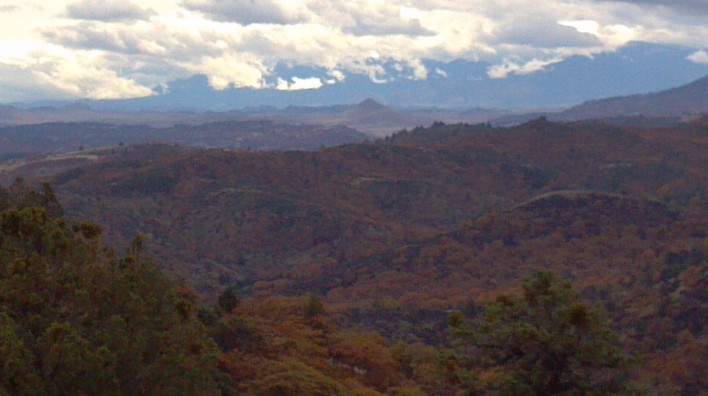
An overlook in the Horseshoe Ranch WA, California
The Horseshoe Ranch Wildlife Area has been a great place to find abundant quail and rabbit. It also appears to be turkey country though I have never seen more than tracks there.
After a mile into the hike, the rain began to soak my clothes. I chased down a few birds and drudged on toward the Oregon border.
The rain finally let up and the gulch I was following for miles yielded more beautiful birds.
Having accomplished my goal of hiking as far into the wildlife area as I hoped, and with a few birds in my pouch, I set off on my return. That’s when the real pay-off of this arduous hike came.
I was about one hundred yards into an opening with a stand of mixed oak and pine to my right when I heard the rapid sound of pounding hoof beats and a strange hissing/snorting coming towards me. My heart quickened and I froze in place.
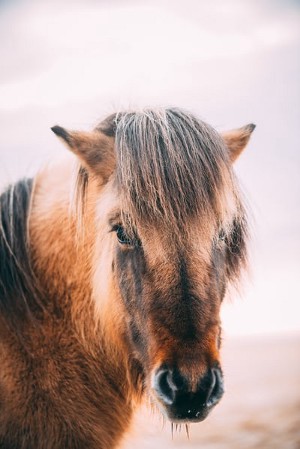
I couldn’t imagine what was making this disturbance. I jolted around to see a big, reddish-brown wild horse dead in her tracks as I heard myself hissing back.
Image by Christopher Rusev on Unsplash
We stood motionless, staring at each other. I searched the area for others as I supposed this giant beautiful creature was doing as well.
A moment passed and the creature walked back into the protection of the woods. I stood for a moment longer, month still open, digesting what I had experienced. I gathered my thoughts and continued on my way.
I rested upon a hillside that overlooked the bright reds and oranges that made up the fall scenery. My mind wandered into the many amazing past experiences I have enjoyed because I decided that getting up at some ungodly hour and submitting myself to nasty conditions would somehow be worth my time and probable discomfort.
As sat there, I became aware of how sore my legs were. I was wet, tired, hungry, and still had almost two miles to hike back.
None of that mattered. I had experienced something incredible. An experience those who choose to stay in their warm, comfortable beds will never know. That’s why I woke up early.
The hope of one new experience is why I will continue to pack my gear up and down hills, sit in the rain, drudge through creeks, or drive for hours into unknown areas. The discomfort goes away while the memory stays forever.
Frustrated, and a bit hopeless, you leave yet another “ideal” area. You hiked your tail off. You have found all of the tell-tale signs of a great hunting area: tracks, feathers, and fresh scratching around roost trees. You waited patiently, knowing that your prize will come sauntering in. You wait, hoping, praying as the sun begins to set. And then you stretch that wait just a little longer. Ugh! Well, okay, maybe that was a bit of muffled swearing, but you get the point.
Anxiously, you returned next week. “One more time; today is the day! My scouting until my calves burnt and jumping in pain through the relentless cramps at night, those were just the little dues I pay to reap the great dividends when that big Tom is in the back of my Outlander.” You sit. You call. You wait. Another morning creeps by without a sound. Frustrated, vowing to give up this stupid hunt, you head down the gravel roads and questions begin to pop into your head. “Am I calling too often? Not enough? Are they the right calls? Did the birds come by and I missed them?” As further disappointment settles in, your rig pops onto the paved signal of complete failure.
On the Road Again
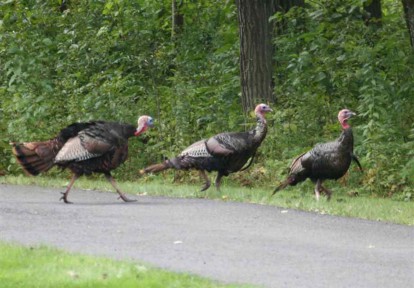
Sure, now you see them. There they are; crossing right in front of you. Those tricky, arrogant turkeys! They don’t even run. It’s as if someone guided them into their safety zone and they are not going anywhere. And this isn’t the first time. It’s like a bad dream, one that has played over and over, you know; like that movie, “Ground Hogs Day”. Oh, of course, there is an unmarked gravel road just about 100 yards away but you never bothered to really look around the area to see if there are houses, or what kind of land you are next to. Why would you?
How many times have you seen A DOZEN turkeys crossing the road after putting in a long morning of utter frustration?
Why? Because almost every day, whether hunting or returning from work, I would see turkeys just off of the road, usually on a fenced property, or alongside a paved road that was close to an open area I could hunt if I knew anything about it. And I wanted them. Oh, how I thought, just for a millisecond of course, about how I could jump out (heck, I could shoot from inside my car!), blast one of those bad boys, toss him in the back and be gone before anyone knew better. That’s just stupid, crazy and lazy. There had to be a solution to all of those birds that taunt me as they linger in a farmer’s field or alongside a paved road.
Map it Out!
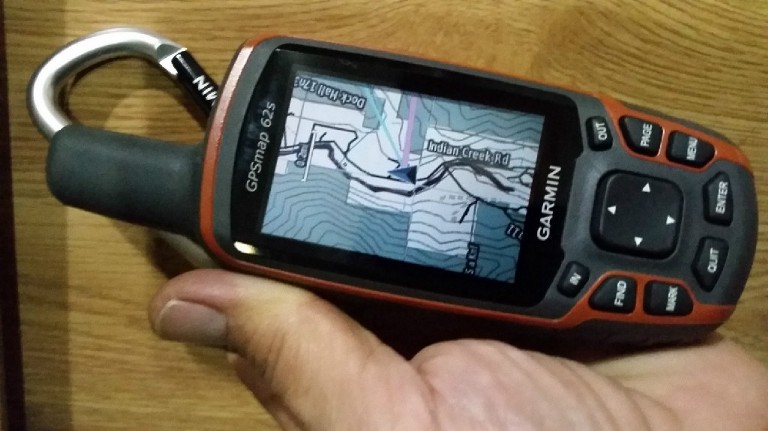
If these turkeys are really that smart, I was going to be much smarter. I could; I walk upright. I have a degree in biology: that should help somehow. Maybe those other things aren’t so important, but: I have hunted other birds for years, and I do love technology! Bam! The simple solution was right there in my hand as I reached to open the glove box and put my Garmin GPSmap 62s away. I just had to figure out exactly how this baby was to going to be the answer to my turkey troubles. One of my fellow teachers, Mike Howard, who always gets his bird,
Photo by Steven James
Such a simple, detailed, incredible device that does so much more than keep you from being lost!
told me to take his GPS, so I could get around easier. I liked it, it was fairly comforting, but I couldn’t see how it would really help me to get to those dog-gone birds hanging out on private lands. And it was an older model that was really difficult to use. That next Monday he showed me exactly how he used it. Funny how he always has me suffer a little before he would show or tell me everything I need. Mike knows the boundaries of all public lands and the names of the owners of the private lands. Now I do, too!
Knowing Who and Where
Deep in the bottom drawer, tucked away safely, waiting to forever change how I think about my hunting world, was a tool about 3mm wide x 4mm tall and 0.25mm thick that I had almost forgotten about. I ran into my room, tussled about the papers and worthless junk until I found that little opaque case that housed the gold. There it was; myOregon ONXMaps Hunt Premium PLAT Topo Map.
I drove up to the house that was set on the front 2 acres of the twenty-acre hayfield. A couple of dusty-faced boys ran past the car as I edged towards the front door. “Can I help you?” came a call from off to the side. I stepped back and said “sure, Dave? Dave Williams?” “That’s me” was his reply. I walked over with my hand out to shake his. His glove came off as he asked who I was. We talked just long enough for me to let him know that I would be behind his property and that I would be trying to call in the toms I had heard coming from inside of his field last week. He said that was fine and that if I needed to, I could cross his fence to retrieve any of those stupid-ass birds that have been destroying his garden.
Photo by Steven James
After an hour and a half, I still couldn’t get those darn yard birds to move up close enough. It was late in the season, and though I got a few return calls and a gobble or two, they just wouldn’t move up close enough. I left without a trophy, once again, but now I had a plan. I would use my ONX Mapsto find an area where I could set up on public land and call Tom or even Jake, from off of a private field. I had just the place in mind.
It was a good plan, no really, it was. I had seen turkeys around that area and there were wooded areas all around. I selected a couple of spots to try, and then I confidently looked up a couple of more recipes for that long beard I was going to bring home today. So I went to the first area and I stayed for over two hours before moving to the next area where I wasn’t quite so patient. Forty-five minutes later I was loading up my car, sore with a bit of turkey-butt, and really disappointed. With my
Bellini 12-gauge in its case and my seat belt latched I limped slowly down the road, thinking about my next day hunting.
Then I caught a glimpse of something just off the road, behind some blackberry bushes. I thought, what the heck, and gave a short series of yelps. To my surprise, a faint gobble resonated from about a hundred yards ahead of us. I waited, in my car, on the road, for a moment before putting. Again, a new surprise; another young Jake ran up to the fence, just about ten yards away. Now what? I had three potential targets, including the one coming up the roadway toward me. I panicked. Of course, what else would I do?
I put the Outlander into reverse until I found a spot to park, which was only about fifteen yards away. I got out the passenger-side door, opened the back tailgate and slid out my gun. I took a quick look around before grabbing my Garmin. I had left it on, meaning there would be no wait time for it to get started acquiring satellites. I was easily able to determine that the wooded patch next to me was BLM, even though there appeared to be a fence around it! I scurried out a couple of hundred yards where I hunkered down next to an oak tree and yelped once more. Gobble, gobble, gobble, came the call from out in front of me. It was the young Jake that ran up the road towards my original position.He strutted past my car and froze. He looked confused so I gave a faint yelp. Jake didn’t need any more coaxing; he ran straight into me. He seemed half-crazed as I put him down, just about twelve yards out.
Now, as I prepare for the fall turkey season, and the upcoming deer season, I am updating and studying my ONXMaps Hunting maps. I’ve marked a few spots where I have seen a bear, turkey, and deer, so I can easily find that area again when the season starts. Now I’ll know exactly where I can go and, if needed, who to talk to. The ONXMaps has really opened my potential.
Attempting to swim in a half-frozen pond was stupid. Funny. But Stupid
Hey! I was 17 Once
I started waterfowl hunting when I was 17 and have continued to hunt for years since.
I regretted not taking my own son out to share the joys I had experienced. So I got excited when the opportunity to take one of my high school students along. I was eager to share my expertise and give him a memorable experience.
I thought of what it was like to go hunting at 17 as I planned for this outing. I didn’t think about being practical, much less comfortable when hunting ducks.
All I needed at that time was my Winchester 1100 and a box of shells. Maybe some alcohol. If I had to break some ice to retrieve a couple of Greenheads I would jump up and go after them. Next, I’d run to the truck, turn the heater on and wait 15 minutes. When I stopped dripping I’d return for the next round.
But I am no longer 17 and I should be wiser.
We had a strategy
It felt like a warm day. The sun was out and the temps were up in the high 30’s. Ice still covered a large part of the pond but we could hear it cracking among the cackling of geese.
Image by Roman Averin on Unsplash
After determining our prey’s location, we devised our strategy. We would crawl up the side of the bank on the southern slope. There, we’d listen for a minute to confirm the location of what we knew were to be big, beautiful, fat Canadians. And then we’d target our prizes like soldiers on the battlefield.
Unfortunately, that’s where our planning ended.
Did I Forget One Detail?
I can’t believe I had thought of everything about this hunt except for one detail. How we were going to retrieve birds left on the ice was not considered. How could I leave out that detail? I am supposed to be wiser.
Well, you can guess where are all our birds were that day when we jumped up and unloaded our guns. Yep, four Canadians and one Mallard all on the ice 45 to 60 yards away. Now, all we had to do was go get them. Uh, yeah.
Sure, I knew it was colder than earlier this season when I went in after some birds. But I was going to show the kid what it meant to be tough. How bad could it be? I used to jump in without even thinking about it.
I’d Show Him How Tough I Was
Besides, I didn’t want this kid to have the chance to jump right in, grab the birds, and show up the old man. That was it; my ego was at stake. Freezing water would be no match for me!
Yeah, right. I made it out about 40 yards when I felt my heart pounding, cramping in my legs and my breath getting shallow.
Crap! I’m going to die out here!
I came to my senses (whimped out), turned around, and headed for shore as fast as I could.
Outsmarted
The kid, who never even considered going after them, was laughing like a hyena as he videoed the whole thing. He then called one of his buddies. I sat dripping and shaking, humiliated while he recounted the story to his buddy. The boys continued to laugh as they watched the video over and over again.
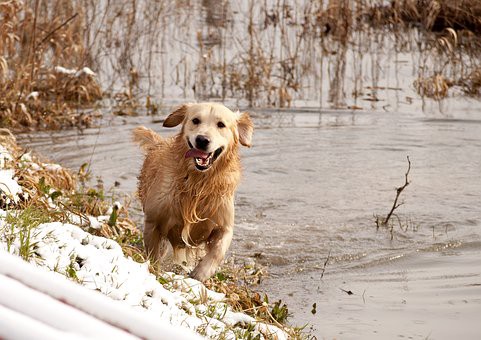
The other kid brought his Golden Lab. With his tail wagging, he retrieved our birds.
Image by Deedee86 on Pixabay
The kid later confessed he told his friend to stand by with his dog.
Before leaving I thought I should jot myself a reminder. A few old familiar words were all I needed: “Prepare or Die”.
I guess it goes to show that being older doesn’t make you any smarter. At least I accomplished what I set out to do that day; I gave that kid an experience he’ll never forget.
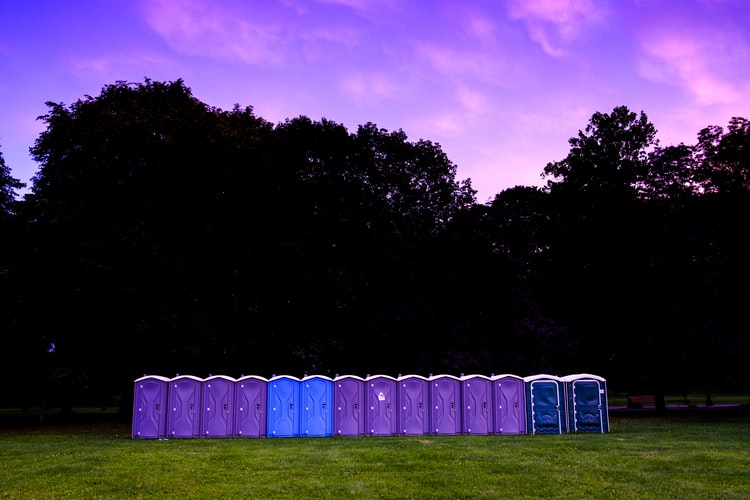
Maybe it was the smell. Or, the lack of room. Perhaps the idea of being caught. Or the flies. Whatever the reason, we weren’t about to fall asleep in the porta-potty that cool, quiet morning just outside of Placerville.
3 am. Nobody else around the dirt track. Beer cans slid along the floor as we came to a stop in Lenny’s white-panel van. Ten of us were crammed inside. Mostly sitting on the bare, metal floor. Dave and Tim on the two unopened cases of beer. Me on a fender well. “Out! Let’s go.” Mike shouted after chugging another black and white labeled ‘BEER’. Ah, only the finest of brews for these under-age American boys.
“Where?” it was my first time to the Hangtown race track for motocross races and I didn’t have the $15 to pay for admission. “You don’t need no stinking ticket” Mikey assured me. “We’ll just jump the fence and hang out in the woods for a while before the races begin.” That seemed reasonable. It wasn’t the first time I had snuck into an event or property. And alcohol does increase bravery. Uh. or stupidity. Just a matter of perspective, I guess.
Lenny and Blake were the experts. Both had been racing for a while. It was their idea to head to Hangtown for the weekend to watch the races. They weren’t about to sneak in though. No, they wouldn’t chance missing the races and, besides, the real fun was to see how Mikey, Mark, and I were going to sneak in. It always seemed to work that way. Those two came up with exciting ideas of how everyone else should risk their lives, jail, or at least embarrassment. And I was suckered in for it every time. This morning was no different.
Our plan was simple. Hop the fence, head to the far back corner of the track and wait for the morning light. Then we would. Well, we would figure something out. We gulped down a couple more luke-warm generic beers and headed east, away from the van, and the ticket booths. Mark, Bill, Mikey, and I would meet up with the others after the gates opened. Somewhere along the line, Mikey and I were separated from the others. It didn’t matter. We had a mission.
Honestly, I don’t recall much of what happened. We heard something and naturally assumed that we were being pursued by wild attack dogs, or mountain lions or banjo-playing hillbillies. Whatever it was, we were not about to be taken prisoners. We ran. Fast. Blindly. Right up to the moment when there was only air under our feet.
Thud! Oomph! “Aw crap!” Yeah, Mikey actually said crap. Not “aw shit”. I knew that was bad. The dirt under the golden, dry grass was soft. Or, I was drunk enough to not know if I was hurt. I rolled over on my back and gazed up at the stars. Well, maybe the impact of falling off a six-foot embankment was the real reason I was seeing stars. Anyway, I took inventory of my body, decided that nothing was out of place, and should check on Mikey. “dude, you alive?” “Uggh, I think so. What the hell?”
A few moments later we were on our feet. Just not so fast now. Time for a new plan. It was getting closer to daybreak and we were sore and a bit cold. Giving up was never an option. What we needed was a real hiding place. Somewhere guaranteed we would be inside of the arena without getting caught. Mikey stopped to pee. “That’s it! I shouted. The shitter. There’s a bunch of them scattered around this place. We’ll just hang out until the races start.”
“NO. FUCK. NO. I am not hanging out, crammed into a stinking shitter for who knows how long, with you or anyone else. That’s just sick. I’m not that drunk.” Mikey insisted. “alright smart guy, what then?”
The first porta-potty was an instant “no way!” Twenty minutes later there was a slight touch of red reaching out of the eastern sky. We were running out of time.
Your standard porta-potty has far less room than I remembered. We weren’t smashed together or anything, but it doesn’t take long for that unsettling feeling of being claustrophobic to grab you by the throat. Especially with that strange, blue-water smell digging at your nostrils for a while. And, just exactly how do you pass the time, in a locked porta-potty, with another guy, for hours? You have to be quiet. Can you imagine being caught? A big ol’ redneck sheriff officer grabs you by the collar and says, “Uh, what in damnation are you two up to in there? NO. I don’t want to know. You’re coming with me.” So you just stand there. For two torturous hours. Waiting. Swatting at flies you can’t see.
Waiting on sunrise was not so bad. That was no more than about 40 minutes. Waiting for the right time to get out. Painful. Brutally painful. How do you decide when the right time is? And then there’s plenty of time to think about all the horrible things that could wrong. Like, someone decides to move the porta-potty and we get dumped on. So gross. “Shit!”
The knocking was pretty intense. Now what? How do we explain this? What the hell were we thinking? “Open up. Sherriff’s dept. You’re under arrest for trespassing.” Funny dick-weed. Real funny. Mikey quipped as he pushed past me. Blake was bent over cracking himself up while Lenny was looking out nervously. It was so good to see the sun and breath fresh air.
The races were a blast. Even with a slight hangover. Some food, later on, would certainly help that. I wonder who would be up for a ‘grit-n-split’?
Excitedly I dial the phone. “C’mon, Jimmy, pick up!” He’s got to get up here. It’s 5:00 PM on the last Friday of the goose season in California. I can’t let him miss this opportunity. He was supposed to come up for this last weekend but I hadn’t heard from him yet. We would miss out on great hunting that was happening now. And isn’t that the way it works; you tell someone how great the hunting or fishing is and then when you finally get out there’s not a bird or fish to be found! That’s how it was with Jimmy. I had just met him and had gone into great detail about how great the hunting has been. He was so excited that we went out and bought tags and gear to the tune of almost two hundred dollars! We loaded the dog in the truck and headed to the Paynes Creek Wetlands and then to the Mouth of Cottonwood Creek where we ended being caught in a torrential downpour one mile away from our truck. I had taken him out for the afternoon in hopes of showing him how great the duck hunting is in northern California. Instead, all we did was a lot of hiking, driving and getting soaked. This weekend, though, would be different. It had to be!
On my way out to the pond, after work that last Friday, I stopped at a couple of the ditches, hoping to flush a few greenheads. No luck. I moved onto my favorite pond with only 30 minutes of daylight remaining. I really wasn’t planning on hunting the pond. I just wanted to get set up for the morning hunt. I brought out my “Rig ‘em Right” set up, camouflage netting and other assorted items. I brought my shotgun only because I wasn’t about to have to recant yet another story of how I could have shot something if only I had been prepared. That decision paid off.
A downpour of Honkers
I set my gear down less than ten yards from the bank. The only available water on that 10-acre pond was a strip that was about 100 yards long and 40 yards deep, along one side. I watched as a few small flocks of Honkers moved around the blue sky above me. I went about setting up for the morning by grabbing a few handfuls of bunch grass and plopping them onto the frozen ground in front of me. I had only been there fifteen minutes when I decided to watch the continuous flow of geese around me. I figured I could always work on the blind after shooting time is over. A few minutes later I was dialing Jimmy.
“Dude! Get up here. I just knocked two Lessers and a couple of Mallards out of the sky!” He was still in Reno though and wasn’t going to be able to come up until Sunday. Great! I can just see it now; he’ll drive up early Sunday morning, we’ll sit out there freezing our butts off and never fire a shot. That’s the way it works. His loss; I was going back out in the morning without him. It had been two weeks since I last hunted the ponds and the birds were thick so I was going to be there early the next morning.
Somehow my plan of early didn’t match up with the rising sun. I arrived on the pond as the sun was splashing a few rays of light onto the horizon. I set up my decoys, applied finishing touches to my little make-shift grass blind and waited. I didn’t have much hope though because I spooked what I imagined to be every single bird on the pond. Nonetheless, I decided to hang out anyways. I was rewarded with a few nice mallards five minutes after shooting time started, then nothing.
A couple of hours later I walked around the pond to check other areas. It was frozen almost end to end. I was going to have to move the blind. I went out to gather wood to build up the blind so that Jimmy and I would both have a little bit of concealment. I fought with the frozen ground to wrestle some more bunchgrass out. That’s when they started coming in again.
Honkers. Not lesser, but big full-bodied Canadian Honkers. First, a flock of twelve landed on the ice about sixty yards out. Too far. Then, over the next fifteen minutes, three more flocks swirled around, glided, set their wings and landed amongst the others. It was as though they were mocking me because each flock would circle just out of reach before landing. Then they just sat there. I waited. My feet were frozen thanks to a pinhole in my waders. My hands were half-frozen because I didn’t dare take my hand off of that Benelli Nova. An hour passed. I was ready to give in when, without apparent reason, one flock took up to the sky again. But it wouldn’t pass over me. I waited. A second, and then third flock rose, again just out of reach even with a Full choke. Finally, one big beautiful bird decided to head my way. Not in the air but on the water. My heartbeat a little quicker as it came towards me. BAM! One-shot and I had my third goose for the weekend! Now I just had to retrieve it.
A little ingenuity
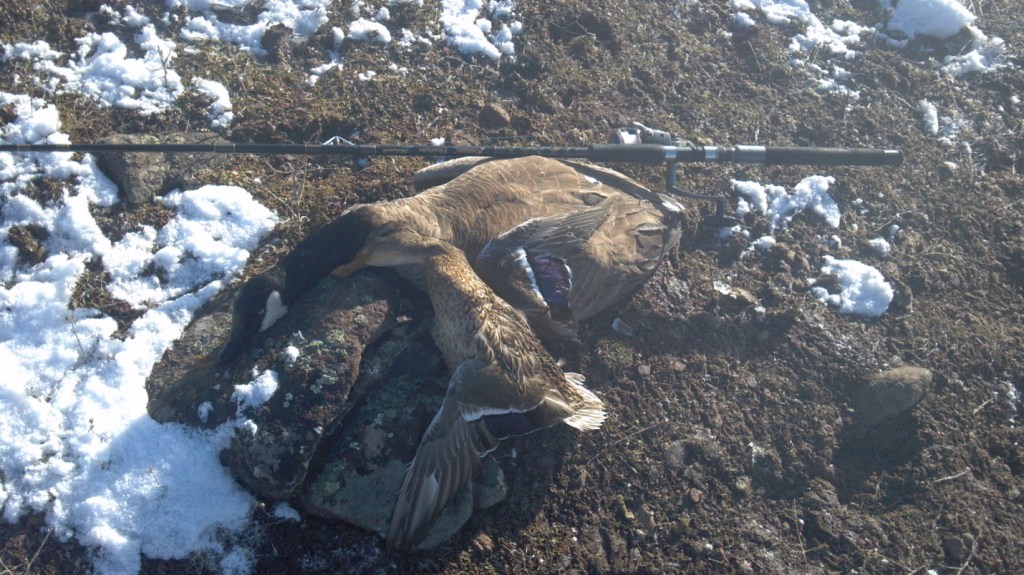
I’m glad no one was there to witness my first experience with a fishing pole as a way to retrieve birds. Experience has taught me that I had no chance of swimming after it and the two ducks that were out there beyond my reach. An hour and three decoy weights later I had my birds. “Jimmy, get up here! You gotta make it for the evening hunt”. Though much more excited about my results, Jimmy still wasn’t going to make it before morning.
I spent the afternoon preparing for the evening. First, a trip to Wal-Mart for more shells and a tennis ball. Three-inch number twos by Winchester are cheap and effective. The tennis ball was to be the trick to not losing weights cast into ice. By 2:30 pm I was ready. As I was pulling on a dry pair of socks my phone rang. “Hey, I’m on my way up!” I couldn’t believe it. “What? Now? You will only have an hour if you are already driving.” His mind was made. He would call before reaching town and meet me at the pond.
As I arrived and looked out over the pond my stomach sank. There was not a bird (Coots don’t count!) to be seen. I had some glimmer of hope as there was a large flock of geese east of me about 400 yards away. I went about fine-tuning my gear and blind. I directed Jimmy to the site by way of several calls including the “I think I took the wrong turn” call. 4:15 pm, not much time left to hunt, but it could be enough. Jimmy walked to the blind excited about seeing the dozen or so coots and mud hens. We sat and waited. And as if on cue, four Honkers came from the southeast towards us. Jimmy raised his gun. “NO!They’re too far out. More will come. Trust me.” He couldn’t believe I wouldn’t let him shoot. Besides, I said, they were too far over the water. He sighed and set back down. I was going to regret saying that. To try to ease his fears of having wasted his only chance for birds, I explained how life works around this pond. I told him how at first we would see the Blackbirds and then the Magpies fly over. If any dove were still here they would be next, followed shortly by the first of several flocks of geese and maybe a few ducks. He seemed satisfied.
The Blackbirds passed. The Magpies passed. We heard what we thought to be hundreds of geese off in the distance. The far distance-not close. Not here. No geese. No ducks. Nothing! I’m getting a little concerned we might not be so lucky tonight. A half-hour passes and now I am really worried that Jimmy had driven one hundred and fifteen miles for nothing. when there are only ten minutes left of hunting time, I started talking out loud. “I know they will be here! They have to be here. Please be here!” Each minute went by so slowly! Eight, seven, six and then five minutes left. Nothing. I’m getting depressed. What was I thinking? I actually stopped him from at least attempting to shoot a goose! Not feeling so good about that decision.
Four minutes to go. As before, we thought we heard a faint honk. “Woosh” six mallards drop in out of nowhere but out of range. “Wow!” Suddenly, like a thunderstorm, wing beats, honking, quacking and splashing all around us. The heavens opened with three minutes remaining and the sky was raining waterfowl. Bam! Bam! Bam! Ducks and geese hit the water. I’m up to my chest retrieving and the birds are still landing all around me. Jimmy is like a kid in a candy store.
Quickly he’s out of shells so I tell him to grab my gun and shoot a few more. He declines, happy to have dropped his first-ever goose and several ducks, which were out of reach. Meanwhile, I’m still trying to figure how to get the birds out of the water before it gets dark. The fishing pole idea was a bust. Sure, it was fine when I had an hour, but the light was fading. I suggested he just head home and bring his dog back in the morning.
I still can’t figure out why he didn’t bring him in the first place. Oh well, the birds would be cool enough and I would get out there early (seriously, early). I then suggested he could always go to Wal-Mart. They have kayaks. He could buy one tonight and we could gather the birds before the ice formed over the remaining part of the pond. He left with a promise to be back in the morning. Then, as before, my phone rang as I was putting away wet, cold clothing. Jimmy had bought the kayak and was going after his birds!
Steady there, Big Guy!
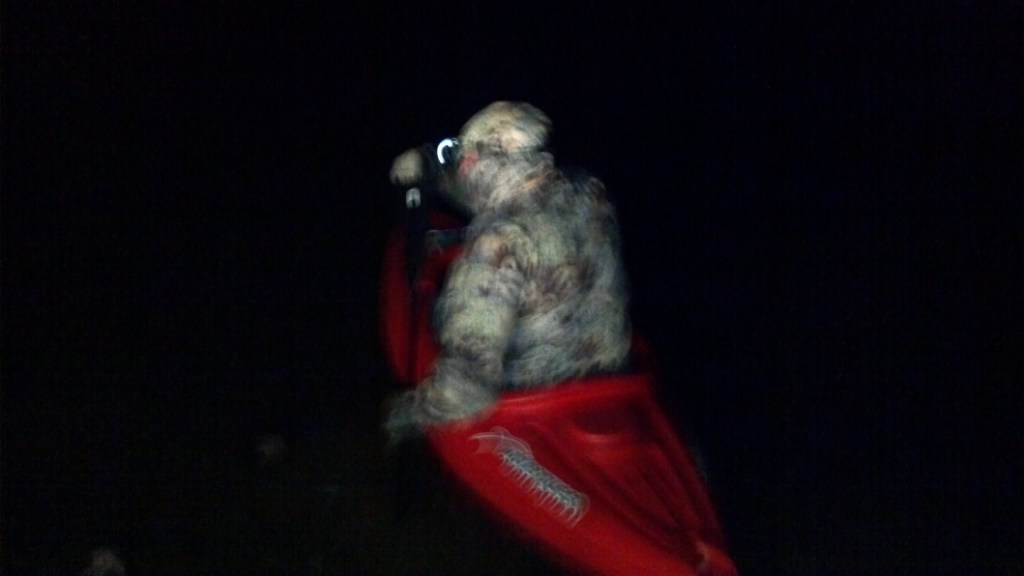
We were able to drive right to the shoreline. The truck lights were swallowed by the layer of fog floating on top of the quickly freezing water. Headlamp, paddles, waterproof gloves – Jimmy was ready to go. I looked at the label of the kayak. “Not to exceed 245Lbs”. Now I’m no expert but Jimmy is a big guy. At well over six feet and several inches, he was no less than 285 Lbs. His body filled the hull of the kayak. I offered to go out but he was determined. Slowly, cautiously he paddled from side to side until he had pulled out the last of the birds. Coming towards the shore was one honker, five assorted ducks and one big, shivering, happy guy. I helped him out of the water only to later discover my phone wasn’t as lucky. We moved down-shore a hundred feet where I put the kayak back in and I set out to find any remaining birds. Twenty minutes later I was out. We loaded the kayak and headed into town to celebrate. One beverage and lots of retelling of those three minutes were enough. It was time to head home and get ready for a card game with friends. I stayed out until 3 AM. Why not? I had no reason to get up early. I had plenty of birds. I would just go out later the next day to bring back some of the decoys and gear I left out.
It was 10:30 Sunday morning when I decided it was a good time to make the twenty-minute drive to the pond. Once again, just in case, by some freak chance, there were birds out there at that time, I threw my gun into the car. I was glad I did because this was just one of those crazy, unexplainable times. Within an hour of arriving, I had everything packed, put away and was in my car headed home with yet another big, beautiful honker in the back of my Outlander. What a weekend. I never worry about not getting birds or catching fish for myself, but when I convince someone to join me I just can’t stand the thought of them being disappointed. No one was disappointed in this final weekend!
You don’t have to be a tree-hugging member of PETA to respect nature. Gun-toting Republicans like me also enjoy being part of the cycle of nature. I love being out in the field; the stillness of a peaceful setting and the time spent with an uncluttered mind – free from the distractions and stresses of everyday living. While I do get a rush out of dropping my prey out of the sky or bagging multiple birds with one shot on the water, that thrill goes away when the bird I have shot does not immediately die. I have to admit, though, I hadn’t always been so concerned with an animals’ suffering.
As a child, I grew up raising chickens as a source of food, not pets with names. My siblings and I were involved with every aspect of getting the animals to our table. To make it bearable we made a game out of it. We would chop or pull their heads off and throw them up in the air to see how many times they would flip or how far they would bounce. Pretty sick, huh? Even though I found the process of butchering to be a bit barbaric, I just accepted it as being necessary. These birds provided nourishment for our big family.
Now that I am much older, hunting is a different situation. I still hunt for the food, but now it is my choice to hunt. I could just buy meat from the local grocer. There’s nothing controversial about it. And, that would eliminate the question of my treatment of what I see as a suffering animal.
As a Biologist/teacher, I think I understand the physiology of birds quite well. From this standpoint, I have tried to convince myself that the animals are not suffering. But, in the long run, that doesn’t really matter as, ultimately, I believe each animal is a creation of God and therefore deserves respect. With that in mind, I have researched and experimented with many different ways to humanely treat these creatures.
I have personally observed others, in the field. I watched videos on YouTube, and I read articles where I could find them. The little bit of information I could uncover all dealt with how to quickly end the life of the wounded animal. I thought, as so many others do, that was the goal. The advice you can find on the internet, by the way, runs the gamut from 1) “Duck Commander style” – biting their head, to 2) setting them across your lap, gently stroking them and then cutting their jugular. Both ways claim to be the most humane for ending or preventing suffering. This just didn’t agree with me.
In spite of my education and what I thought I knew, there were still times in the field that I didn’t feel like I had found my answer, so I figured I better look for my answer somewhere far, far away from my thinking. Naturally then, I posed the question to a tree-hugging, left-wing Liberal who thinks her chickens are pets. I was sure she would say that, of course, I have to end its suffering immediately. Boy was I surprised.
We briefly discussed my concern and then I was asked a series of questions I had not considered. Is it humane to take away the process of giving up one’s life? Is it more humane to harass an already frightened animal and cause its last moments to be filled with greater stress? What does it look like when the animal is allowed to experience its last breath on her own terms? How does it feel to have to force the life out of the animal?
I was then asked what I do with fish. Do I leave them on a stringer until they die undisturbed? Or, do I end their life immediately after catching them? The answer is that I always leave them to die on their time. I recognize now that, at some point in my 40-something years of fishing, I decided I didn’t like the idea of immediately ending the life of the fish I caught.
The questions brought back a very clear picture in my mind from my past. I watched a man, who was hit by the footpeg, in his temple, by a motorcycle at a race, experience his death uninterrupted. I stood ten feet away from him. It was clear he was about to die. I found it odd and comforting that he appeared to be very peaceful; accepting. He looked around, drew his last breath, folded his hands as if to sleep, and then slowly lowered his body to the ground.
The tragedy felt strangely peaceful because of the undisturbed time this man had to accept and experience the end of his life.
My mind was then filled with thoughts of other experiences where I witnessed life ending abruptly. Terror, fear, and anxiety was always the outcome when the process was disrupted by another. She left me with this final thought: All too often we experience the most terrifying stress when we are born and when we die.The question has been answered for me. When possible, I will respect the creature by allowing it to let go of its life without adding unnecessary fear and stress. I will continue to give thanks for its life and the food it provides. I know that not everyone believes that the hunter is truly respecting the animal by allowing it to die on its own. Many people will argue that you should quickly end their suffering. That is a personal question for each hunter to consider.hunter to consider.
The opening weekend of the stream fishing season is full of hope for warm days, campfires, hikes, fun surprises, plus a creel full of fish. This particular weekend in paradise included a special addition: a pheasant hunt. Brad Henman, is the owner of Clear Creek Sports Club, located behind the Rolling Hills Casino. He had arranged a special hunt for us.
The Leadup
In the past, I would join my friends Dave, John, and Mark, at campsite #50 of Hat Creek campground. We would scout for developed holes and for fish, so we could claim our spot early the next morning. But this was not a usual Friday before the opener. I took on the job of coaching our high school softball team and we had a double-header that afternoon. Now, instead of filling my car with fishing poles, coolers, a tent, and other camping gear, I spent Thursday evening packing the back of my Outlander with softball equipment. The middle seat would have to hold the sparse supplies I could fit in for fishing and the pheasant hunt on Sunday.
As I replaced the line on two poles the excitement of what was to be a very full weekend filled my head. I was going to drive to the games, meet the guys at the camp, and fish until Saturday afternoon. Next, I would drive 60 miles to spend the night with a friend. After that, I had 50 miles the next day to go hunt pheasant at the Clear Creek Hunting Club. Finally, it would end with a two and a half-hour drive home.
Fishing
Friday afternoon in Fall Rivers Mills had perfect softball weather. It was sunny skies, no wind and warm. Our girls played great ball and as we headed into the last inning of the second game I found my mind wandering again. What will the creek hold for me this year? Can I land another of those big Brook Trout that seem to hide amongst the smaller Rainbows? I left the field and headed south towards Old Station. I stopped on the way to grab a roasted chicken at the local market.
The campsite was set up but void of my fellow anglers. They had gone out scouting after fishing Clear Lake that afternoon. When they returned, we sat around the campfire. We recalled stories of fishing adventures and life events of the previous year. I made plans for an early departure. Three AM? Is that what Dave was planning? No way! I mean, sure, I want to get a great spot. But I didn’t even know where that was going to be because we were all going to go our separate ways.
3 AM is crazy. I set my alarm for 4:07 AM. At 2:22 AM and I am awakened by a noise outside of my tent. NO! It can’t be time to get up, not yet. I poked my head out of the tent, still wrapped in my comfortable down bag. I watched Dave as he loaded his Pathfinder and headed out. Humph. The alarm wakes me at 4:07. Jacket, gloves, headlamp, instant coffee and rods gathered I hike to the stream in search of a great spot.
How I am going to find a great spot in the dark is beyond me. But I claim a spot along a beautiful little stretch that offers a deep hole at the end of a rapid and has a cut bank close by. It’s 5:19 AM. The moon is full and I expect to see a parade of headlamps wandering about the woods for the next half hour. I fidget in the cold air, eyeing the handful of anglers traipsing about. I’m ready to defend my hallowed ground. Lights on the other side of the stream approach. I turn on my headlamp and face their way as if to say: “Not here! This spot is mine”.
But they never get close and I go back to focusing on keeping my fingers from going numb due to the cold. 6:03 AM — I scan the eastern horizon waiting for the promise of light. 6:12 — my shadow from the moonlight is finally gone. I can see the water quite clear. It’s almost time. I am at a perfect spot. The report from the guys the night before was that there are fish everywhere. I am going to slay them!
Where did they go? All those fish that should be waiting for me to fool into my creel? Perhaps they moved downstream so I hike, tossing in my line along the way. I chat with others as I go. “Nope, haven’t caught a thing” I repeated as I move along. I pull out a solitary small Rainbow that is barely big enough to be bait. I continue searching until I find Dave. Thirty seconds after my arrival he’s exclaiming “I knew they were here!” as he pulls in the first of several nice-sized Rainbows from under a log submerged in the stream.
Landing the Big One
Dave is one of the nicest guys you could meet. He is always cheerfully working to make sure that everyone else is completely cared for. Want to go fishing? Dave will have a rod, tackle, snacks and all ready for you and then he’ll point you to fish, wait for you to catch your limit and, of course, clean them all!
I didn’t hesitate when he pointed at the underside of the log, telling me to try to present my worm “right there”. But there wasn’t enough room so I scanned the area. Fifteen feet away from the roots of a small tree, along with other entanglements, offered shelter in the cut bank. I carefully guided about eight feet of line between the snags that waited to entangle my line.
With my index finger on the line, I inched the bait back towards me. Stuck. Wait. Stuck? No, that was a light pull. I respond with a continuous light pull of my own. BAM! The tip bends, the line pulls down across my finger. Fish on! Now, how am I going to maneuver this guy out between the roots and snags? I have lost too many monsters due to impatience but after forty-three years of practice, I finally get it.
Eight minutes is an eternity when working a trophy out of its’ home. It was five minutes until I finally caught the shimmer of its’ golden, spotted side. Yahoo! Patience pays off with a 23-inch, 3.5 LB Brookey.
Of course, I walked the long way back to camp. I made sure the wanna-be anglers got an eye full of my great accomplishment. I was obscure in my description of where I bagged this beauty but offer hope to all along the way. I tried a few more spots, but have to settle with this solitary prize. That is until we drive to another spot that afternoon, where we all land several small browns.
On the road
I left my friends late Saturday afternoon. I stopped to spend the night outside of Redding, at the ranch of a good friend, and a regular guest shooter on the TV show “ California Shot-Gunners”. We inhale some coffee, load the gear and dogs into another friend’s truck and head south towards Corning. James and Randy are both big boys. They’re over 6’3″ and 250 lbs so there is no question about who is riding in the back seat with the two dogs.
Carriers in the back of the truck? Not for these hunting partners! The black Lab is 3 years old and trained for waterfowl. Raleigh, a German Wire-Hair. He’s a rescue dog that came from a kennel in southern California weeks before and is still gun shy. We meet the other two at the club. One more dog joins the group. Abby is a 7-year-old Golden Lab with lots of field experience but not much time out lately. The local temperature has been in the low to mid 90’s. We are not expecting to hunt very long.
Feathers
The air is cool and there is a light breeze at 8:30 AM when the first pheasant was set out into the field. There were five hunters, three dogs and a total of 35 birds. 14 birds went out for the first round, and then 21 for the next round. After that had the freedom to hunt the property for birds leftover from earlier in the week.
We watched the first five birds dart off into other fields before we even step into our designated site. We shot seven birds. Randy, Randy (yep, two Randys) and I bring them down with simultaneous shots from two of us, six of seven times. We stopped for a break at the truck. “Sheeze!’, James proclaims ‘this is the last time I’m going to hunt with a bunch of guys who never miss!”
One hundred feet into round two and Abby is on the point. I am on the interior edge of our line and don’t bother with that bird. Instead, I scout the ground for the rooster that I know is there. Bam! Bam! James and Randy each take birds. I set my eyes back down, about 30 yards out. There, a movement. A redhead and bam! My first solo rooster of the day. The weather cooperates with a cooling breeze and water is available for the dogs. We hunt out that field taking another thirteen birds before taking our lunch break.
Dogs and hunters alike enjoyed a lunch of hickory-smoked ribs from the night before, with lots of water and jerky. We decided to move along the northern border of our field. Then, we cut back along the other side that has a stream and heavy cover. I moved between the top and bottom of the small ridge that divides the two fields. The dogs are on my far right.
Raleigh is settling into his role as he mimics the actions of the other two. He flushes out a hen. Randy O. swings his over/under up along his hip, at the sky-rocketing bird launched from a missile pad. Bam! One-shot from the hip and that hen drops at Randy’s feet.
I catch a quick movement and scan the far edge of the bank. Another rooster! My shot knocks the bird sideways. I call the dogs and we search the blackberries along the steep ledge where it once sat. Ten minutes later I accept that I became responsible for the only lost bird of the day.
It was a good day. The weather cooperated. Everyone got in quality shooting, and Raleigh proved to be a natural hunter and great asset. Of course, in true fashion of all my adventures, the hunt ended with the last bird coming with a bit of difficulty.
We pushed through the last field of the day, staying along the water’s edge. Randy H had trudged through the flooded field of Cattails. With thirty feet remaining of hunting, a hen flushed out behind me, moving to my left. One-shot and she falls into the cattails. Heck yeah! I am proud of that one!
Russ and Randy spot her. Abbey jumped in for the retrieval. But Abbey had a long, tiring day. She picked up the bird and began to swim. Unfortunately, she swims in a circle and spits the bird out: she’s done. Randy does his best to convince Abbey to “get the bird” but she can’t go any further. Instead, Randy becomes the retriever, plodding through the marsh in water up to his knees. Against the odds, bird number 25 will go home with us.